
Investigating Iceland’s financiers
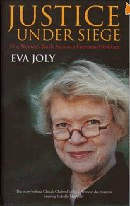 Joly delivers her verdict on everything from financial sector bonuses (immoral) to climate change (a grave danger) and the situation in Gaza (tragic).
. . .
“This is what you see all over the world,” she says, egged on by the documentary makers’ account of how ordinary Icelanders are paying for the crimes of the plutocracy. “The rules are not for the elite. The elite are always living above the law.”
. . .
Perhaps her most valuable contribution is the leverage she has over the investigation’s political masters. Her presence reduces the risk of the probe being suppressed
. . .
“We must be very vigilant. Many people in the market have one idea: to get back to business as usual. We must not forget that this system is very ill.”
. . .
“I am here to help. The people of Iceland have invested me with a great hope, great expectations,” she says. “But it is their country. Only Icelanders can lead this inquiry.”


 Opinion Makers are preparing a “National Assembly” (whole 0.3%) to flash out ideas of how we should mark our future after the horrific failure in our past.